
In this article
After a meal, some of the food becomes glucose, a sugar that circulates in the blood and supplies energy to our cells. The amount of glucose in the blood is commonly called the blood glucose or blood sugar level. It varies throughout the day, but the body must keep it within certain limits.
In type 2 diabetes, this balance is disrupted. Insulin, a hormone made by the pancreas, normally helps glucose enter cells. The cells can become less sensitive to its action, while the pancreas no longer produces enough insulin to compensate. Too much sugar then remains in the blood.
Acting directly on glucose
How could this excess be reduced? In Basel, researchers in Martin Fussenegger’s team have built a device that acts on glucose itself. Their implant, presented in Science in October 2026, triggers a chemical reaction inside the body.
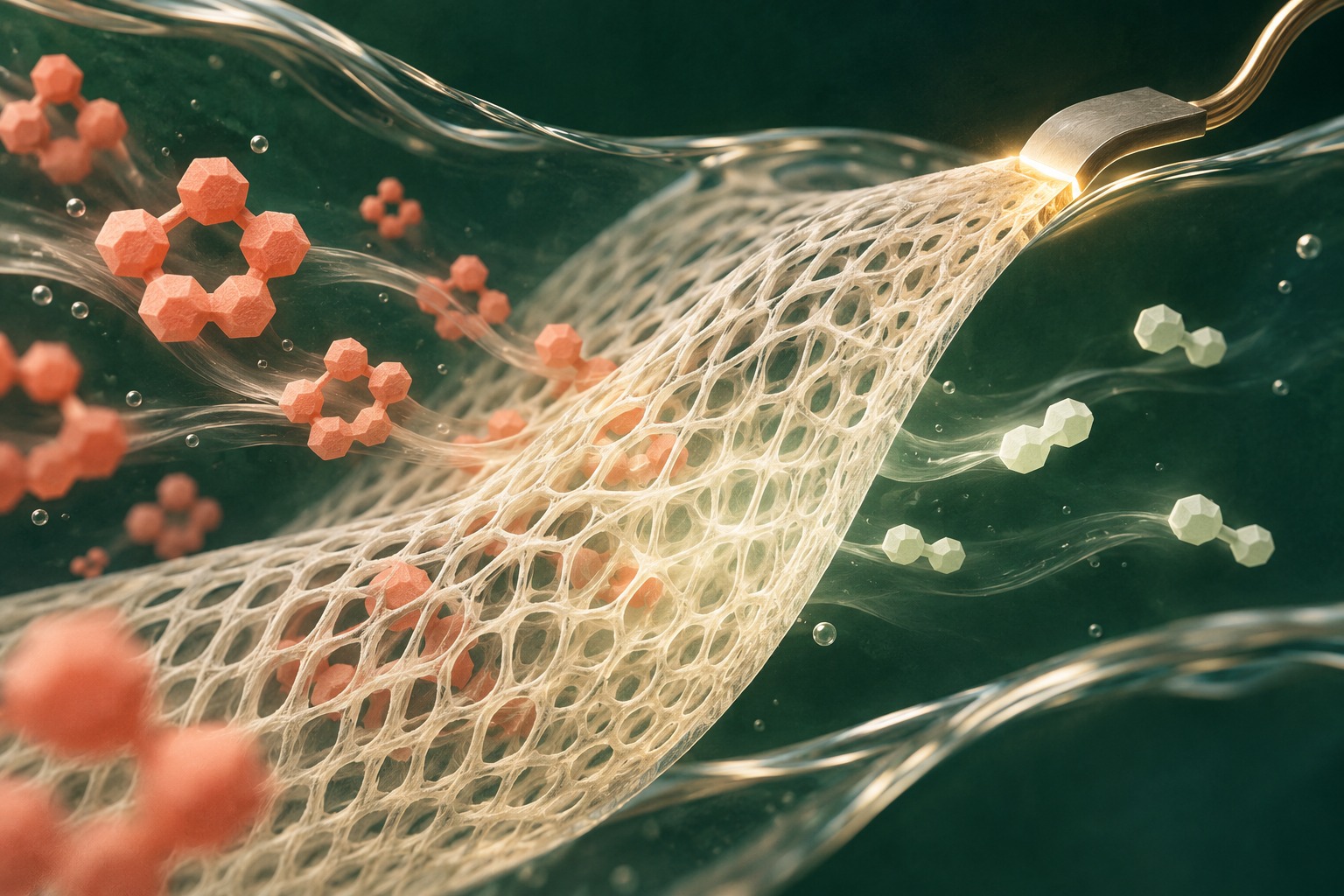
Glucose becomes gluconate, a different molecule that the kidneys can remove in urine. The idea is therefore to remove some of the available sugar by transforming it.
Gold, platinum and an electric current
At the heart of the implant is a catalyst, a material that helps a chemical reaction take place. The researchers use a graphite support carrying tiny structures of gold and platinum. Electricity activates the conversion of glucose.
This part of the device works without living cells or enzymes, the proteins that usually speed up reactions in our bodies. The energy needed by the implant is transmitted wirelessly. Electronics thus provide a way to trigger the transformation.
Measure, act, then stop
To be useful, such a system must act at the right moment. The researchers therefore paired it with a sensor that continuously monitors glucose. The measurements are sent to a smartphone that controls the device.
When the level rises above the intended target, the system activates the catalyst. When glucose returns to the target level, the system switches the reaction off. Engineers call this a ‘closed loop’: the measurement guides the action, and the next measurement allows it to be adjusted.
A thermostat offers a way to picture this logic. The measured temperature determines whether the heating runs; here, the glucose level controls the reaction.
An initial demonstration in mice
The experiments involved mice with type 2 diabetes. Over six weeks, the researchers observed blood glucose regulation and weight loss. They did not detect hypoglycaemia, an excessive drop in blood sugar, under the conditions studied.
No human trial has yet been carried out, ETH notes. Before considering use in patients, researchers will need to check, among other things, that the implant transforms enough glucose and remains effective and well tolerated over time.
A different approach to treatment
Diabetes also affects the health of the heart, kidneys and blood vessels. Its management therefore goes beyond a blood glucose reading. This implant nevertheless opens up a distinctive possibility: using a device to carry out a chemical transformation inside the body, on demand.
For now, the advance is a new way to approach treatment. This Swiss research brings chemistry and electronics together to act directly on glucose inside the body.
Share this article
