
In this article
No recipe calls for cadmium. Yet this metal can turn up in foods from cereals to vegetables, without a cook or manufacturer adding it. To understand how it reaches our plates, we need to look much further back than the supermarket: to the soil in which the plants grew.
From soil to food
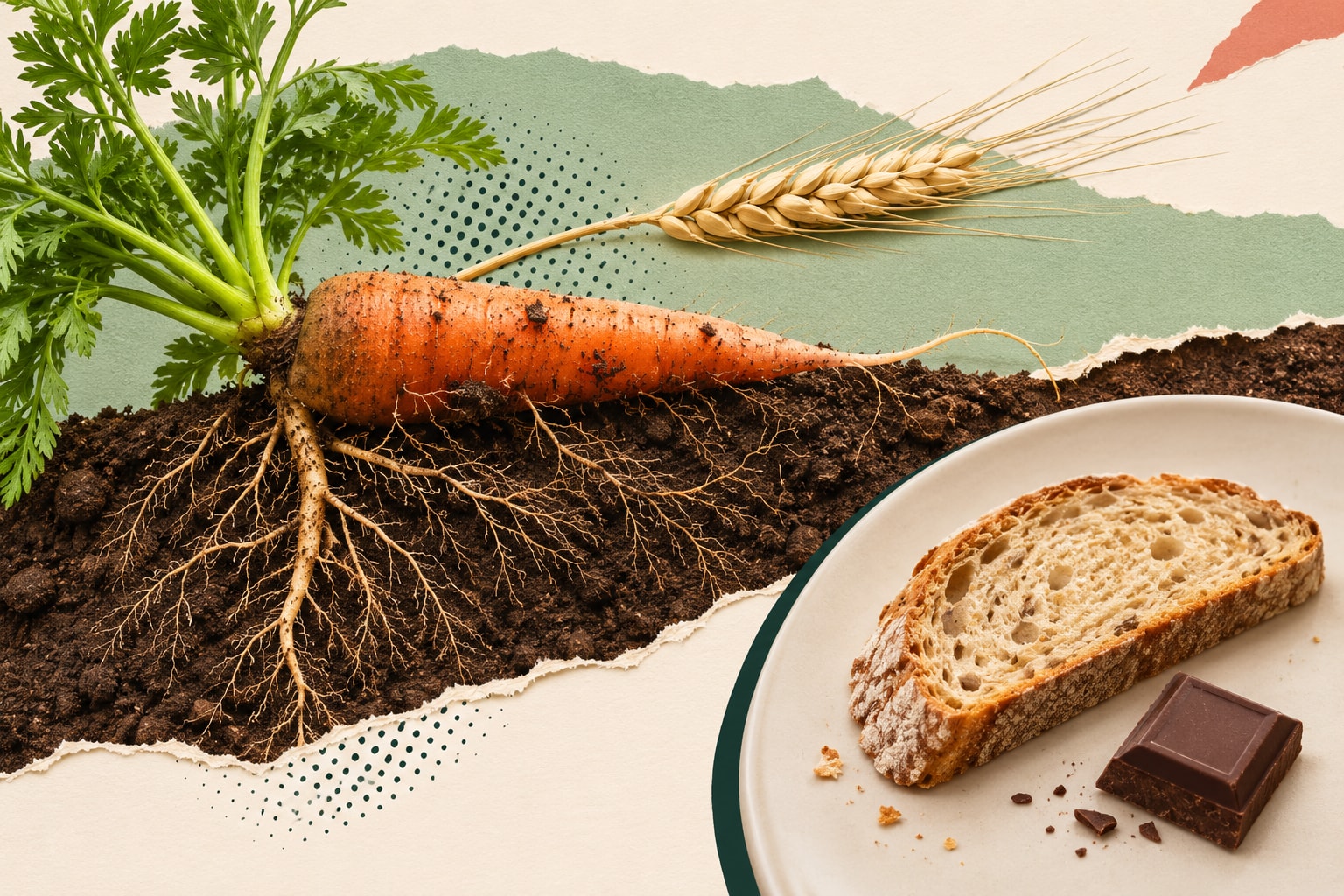
Cadmium occurs naturally in the Earth’s crust. Some industrial activities and fertilisers can also release it into the environment. Plants absorb some of it through their roots. How much ends up in a crop depends in part on the soil and local conditions. Animals, in turn, can take it in through their food.
This unwanted substance is called a contaminant. That does not mean someone has deliberately altered a food or hidden a secret ingredient in the recipe. It means the substance has passed from the environment into our food. That is also why an ingredients list cannot tell the whole story.
Concentration is only half the story
When a laboratory measures cadmium in a food, it reports a concentration: the amount of metal in a given quantity of that food. To work out how much we consume, we also need to know how much of the food we eat, and how often.
A food with a high concentration that we eat only occasionally may contribute less to our total exposure than one with a lower concentration that we eat almost every day. What matters is both what a product contains and how it fits into our diet. Ranking foods by concentration alone misses that second part of the picture.
Health authorities therefore combine food test results with information about eating habits. They do not simply look for the highest value in a sample. Cereals and vegetables, for example, can contribute to exposure because we eat them regularly and in substantial quantities, rather than because each serving contains particularly high levels.
Why the long term matters
The body removes cadmium slowly, so some of what we absorb stays with us for a long time. Repeated exposure can allow it to build up. The kidneys, which filter the blood, and the bones are among the parts of the body it can affect. When it comes to food, the main concern is what accumulates over the years.
That is why health authorities use guidelines for long-term exposure. These help them assess exposure across a population and decide how to reduce it. They cannot tell us, from a single meal, whether someone will develop a disease. Detecting a trace of cadmium is not the same as establishing a health risk.
Reducing exposure before food reaches the shops
In Switzerland, regulations set maximum cadmium levels for certain foods. Monitoring products helps check that these limits are met. Other measures address the problem at its source: releases into the environment, soil and raw ingredients. Shoppers should not need a laboratory to choose between the bread aisle and the vegetable section.
In Switzerland, the consumer organisation FRC and broadcaster RTS had 90 everyday foods tested, including bread, pasta, potatoes and chocolate. All the products tested met the legal limits. Chocolate nevertheless had the highest concentrations, a practical example of why both a food’s contents and the amount we eat matter.
Eating a varied diet means we do not rely on the same foods for every meal. This does not make consumers responsible for an environmental problem, and the possible presence of cadmium does not cancel out the nutritional value of cereals or vegetables.
The most useful clues lie along the route from soil to plate. Understanding that journey helps identify where cadmium levels can be reduced before the food reaches us. Cadmium is an unwelcome guest at the table; finding out how it gets there is more useful than treating the whole menu with suspicion.
Sources and further reading
- FRC and RTS: tests of 90 foods sold in Switzerland. Detailed results by product and category (25 August 2026).
- RTS, À bon entendeur: “Cadmium: should we be concerned?”. Overview of the programme and its tests of everyday products.
- Ma Santé / Bon à Savoir: tests of 17 dark chocolate bars. Analyses of cadmium, lead and polyphenols, carried out in partnership with K-Tipp (March 2025).
- BfR: cadmium questions and answers, 2026
- EFSA: announcement of its cadmium assessment, 2009
- FDA: Cadmium in Food and Foodwares
- Swiss Federal Food Safety and Veterinary Office: contaminants
- EFSA: Metals as contaminants in food
Share this article
