
In this article
The brain has drainage pathways too
We readily picture the brain as an electrical network. Neurons exchange messages, memories form, one idea leads to another. But fluids also flow through this organ. Their circulation contributes to its function, just as the activity of its cells does.
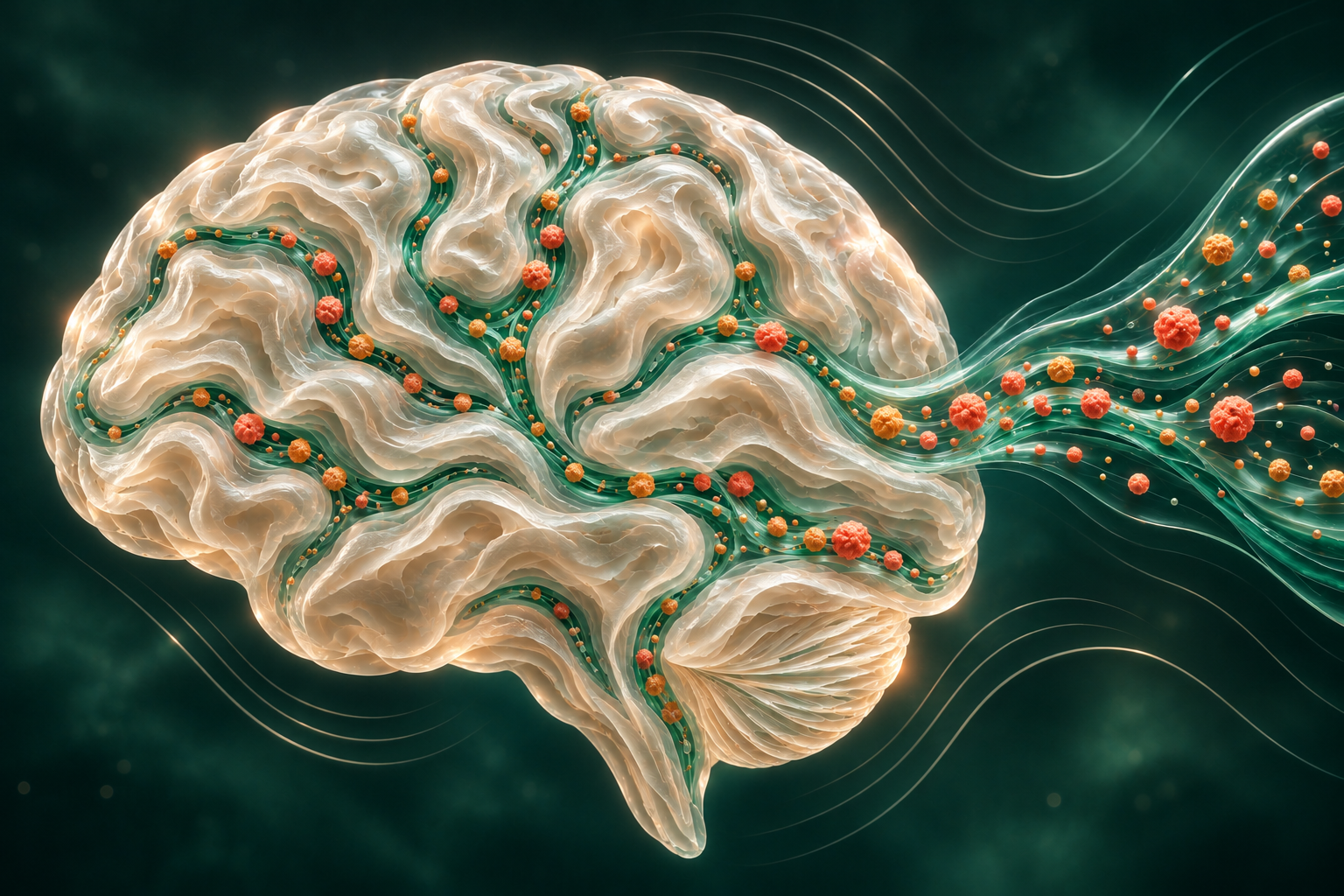
Cerebrospinal fluid, which surrounds the brain and spinal cord, helps protect these structures. It also circulates in spaces alongside the brain’s blood vessels. As this fluid exchanges with the fluid between brain cells, it helps carry substances away. Researchers use the term glymphatic system to describe part of this circulation.
The image of ‘housekeeping’ helps explain the idea, as long as we do not imagine a dirty brain that needs scrubbing. Cells constantly produce and renew molecules. Problems arise when certain substances accumulate or their removal is disrupted. The brain has several ways to handle them; the glymphatic system is one of the pathways being studied.
What happened in the mice
In Science Advances on 16 October 2026, researchers describe stimulation using ultrashort electromagnetic waves, rather than ultrasound.
The researchers tested these waves in mice. A ten-minute session accelerated the drainage of fluids around the brain. After traumatic brain injury, stimulation reduced cerebral oedema. In mice showing some features of Alzheimer’s disease, a week of daily sessions reduced amyloid protein deposits and improved results on memory tests. These effects remain to be demonstrated in humans.
Why this approach is drawing attention
After an impact, cerebral oedema can develop: excess fluid accumulates in brain tissue. The skull leaves little room for this expansion, so pressure can rise and disrupt the blood supply. Better understanding of fluid management could therefore shed light on a very concrete medical problem.
The idea is to stimulate the brain in a way that supports its own drainage pathways. The next steps are to confirm the findings and investigate safety and potential benefits for patients. For now, it mainly invites us to see the brain differently: as an organ whose signals and circulation work together.
Sources
Share this article
